1990 – 2010
Entering the 1990s, environmental issues really began to grab attention on a global scale. With the goal of establishing a high global standard for reduced exhaust gas emissions, Honda independently created its e-SPEC mark to highlight the green technology built into its general-purpose engines. This label was attached to all general-purpose engines and power products that cleared United States’ EPA (Environmental Protection Agency) Phase 3 regulations, the most stringent exhaust gas regulations in the world. Demonstrating Honda’s commitment to leaving a healthy natural environment for future generations, this mark stood as proof that its general-purpose gasoline engines could clear the world’s highest standards for clean power production.
1997, Honda released the super-compact GX22/31 4-stroke engine, the world’s first 360° inclinable model. Until its release, it was widely assumed to be structurally impossible for a 4-stroke engine to continue operating smoothly when turned at any angle. Yet the GX22/31 engine achieved the feat of being a clean and quiet 4-stroke engine that proved to be ideal for powering handheld equipment like brush cutters and power sprayers.

GX22
In 2002, the GX22/31 was reconfigured with an overhead camshaft (OHC) and became the GX25. This model continued to feature 360° tiltability and, weighing in at just 2.78kg, went on sale as the world’s lightest-ever 4-stroke engine.
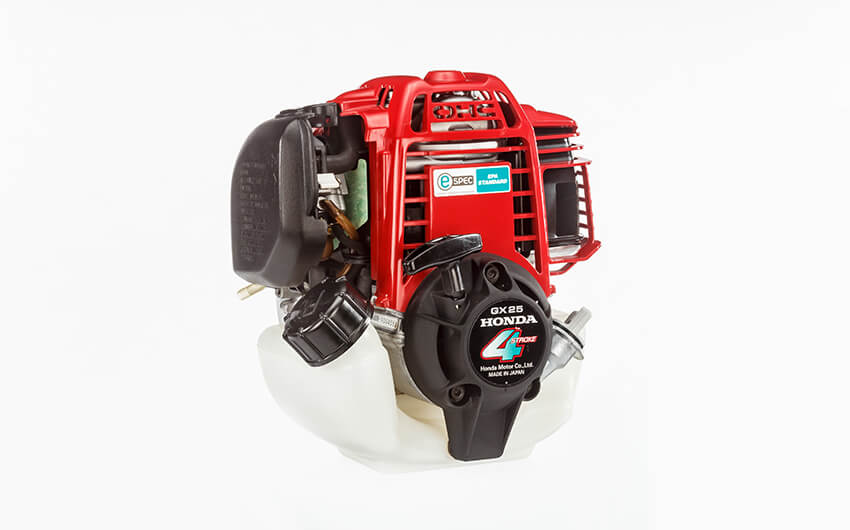
GX25
Honda’s GX series of OHV (overhead valve) engines—which had become the industry standard for OEM-supplied engines—adapted to the constant need for better environmental performance to become the GC/GCV series in 1997. By adopting independently developed technology like the world’s first oil-immersed OHC timing belt and a Uniblock cylinder, it became possible to supply high-performance engines offering superior fuel efficiency at low prices to both OEM makers and the general public.
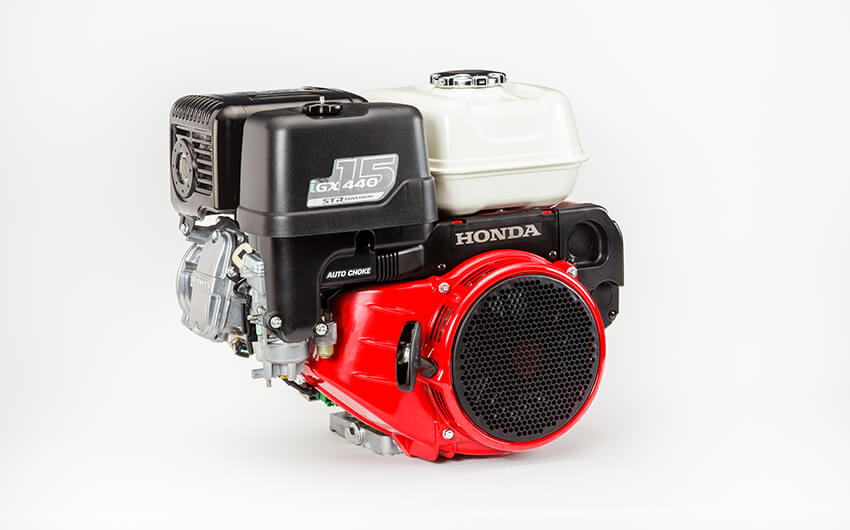
iGX440
In 2005, Honda released the iGX series of high-output engines offering high-functionality for the OEM market. Incorporating the world’s first electronic engine speed control technology in its new STR governor, the intelligent iGX series greatly expanded the possibilities for the next generation of general-purpose engines.
Honda’s GX, GC and iGX series of engines all cleared U.S. EPA Phase 3 regulations, said to be the strictest environmental regulations in the world, as well as CARB (California Air Resources Board) Tier II regulations. Honda’s remarkable technological expertise shocked the world.
In the world of portable generators, the increasing sophistication of electronic products, combined with the shift to digital, lead to increasing demand for electrical output with a steady waveform.
Honda’s response was to release the GENE 21 series of next-generation portable generators in 1998. Incorporating the world’s first microcomputer-controlled sine wave inverter, this series was able to provide high-quality electrical output like that available in most homes. Other innovative technologies like the eco throttle helped these engines resolve the conflicting issues of high power output and low fuel consumption while coming in at half the weight of earlier models, and with much quieter operation. The GENE 21 series soon won a reputation for excellence as a new generation of power generators.
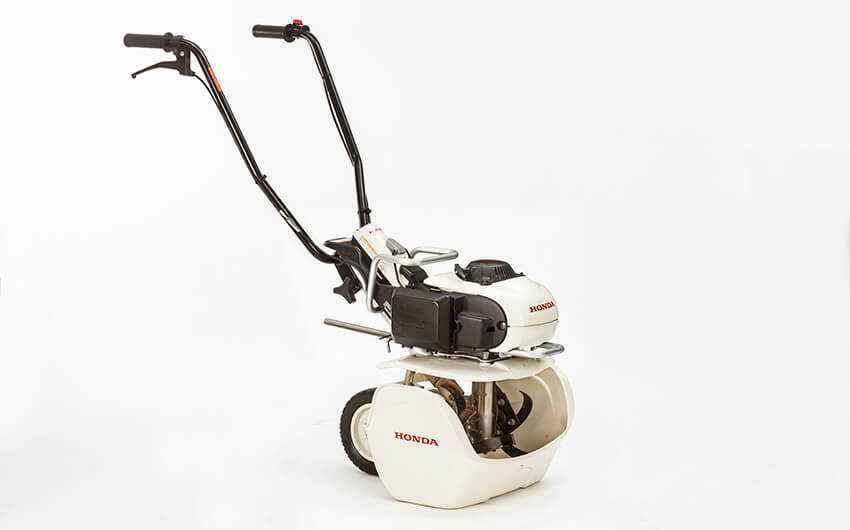
Pianta FV200
In 2009, Honda released the Pianta FV200 gas-powered mini-tiller, which ran on widely available butane gas canisters that were easier to purchase, use and store than gasoline. The Pianta FV200 was designed as an entry-level model for home gardens, and fully ninety percent of its owners have been first-time users of tillers, opening up a previously untapped market.
The ENEPO EU9iGB gas-powered generator released the following year featured superior specifications, yet also expanded sales among ordinary households due to its convenient use of butane gas canisters.
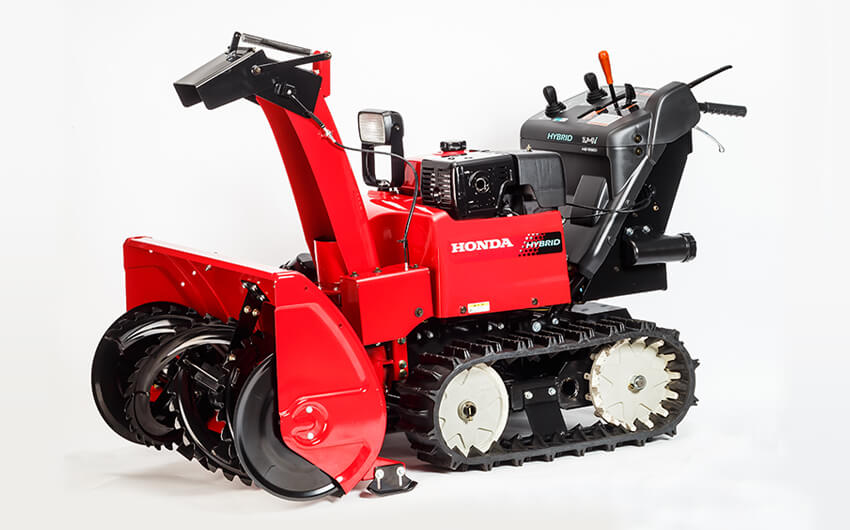
Snowla HS1390i
Honda was also beginning development of electrically powered products. Released in 2001, the Snowla HS1390i was the world’s first hybrid snowblower, using a gasoline engine to power the blower while its tracks were driven by an electric motor. Automated speed controls allowed it to be easily used by people unfamiliar with snowblower operation, and provided a valuable labor-saving tool in Japan’s snow country, which had been hit hard by depopulation resulting from decreasing birthrates and an aging population. Honda went on to release the Yukios-e in 2014, an easy-to-use electrically powered blade-type snow blower that helped in the mechanization of snow clearance on narrow roads or in shopping areas.
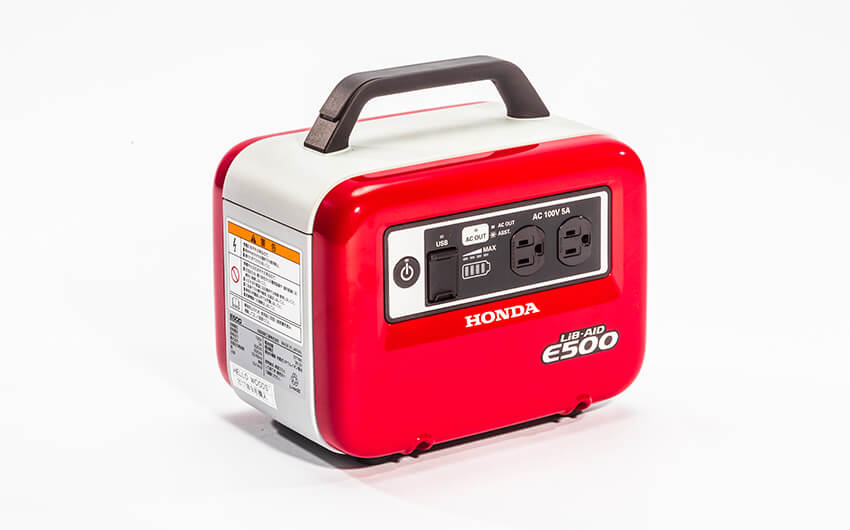
LiB-AID E500
In September of 2017, sales began in Japan of the LiB-AID E500, an electrical storage device, or power bank, developed under the new concept of creating a portable way to carry a full electrical charge. Equipped with Honda’s unique sine wave inverter technology, the LiB-AID E500 provides ‘clean’ high-quality electricity, and has attracted widespread attention as a portable power source that can be freely used wherever the user happens to be, such as inside a car.
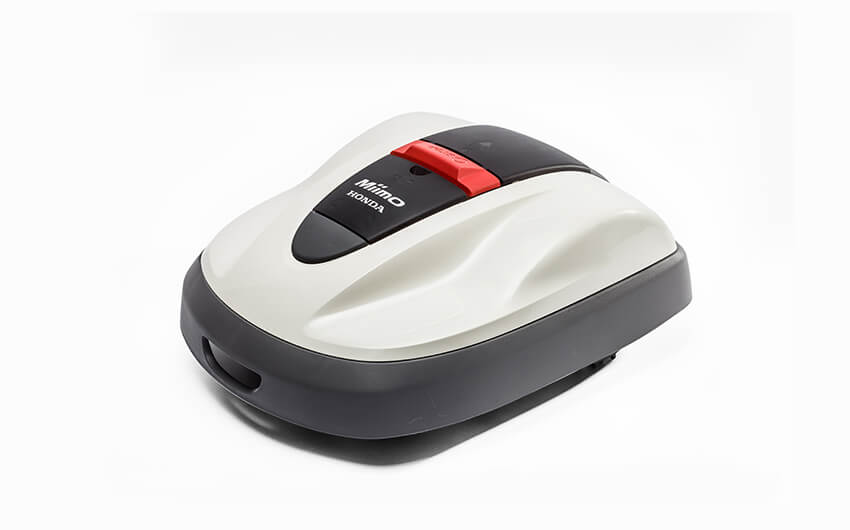
Miimo
In 2012, Honda also released the Miimo robotic lawnmower in Europe. This was a fully automatic lawnmower that not only mows grass, but also charges itself. All the user has to do is set the lawn height. Waterproof, quiet-operating, and with safety features like emergency shutdown, the Miimo can be left to look after lawns with full peace of mind. The Miimo represents a significant step forward toward the future of Honda Power Products, combining electrical power with computerized control.
Starting from a simple auxiliary engine created out of the deprivation of post-war Japan to give power to bicycles, and the H-type engine that marked the beginning of its involvement in power products development, Honda has consistently pursued innovation through technology and ideas to deliver products that offer better performance while being easier to use.
As a result, Honda has built a solid reputation around the world for producing high performance products that are simple to use and don’t break down.
The roots of this success lead directly back to the concept of “making people’s lives better through technology.” Driven by this enduring desire from its very foundation, Honda Power Products will continue to pursue new possibilities well into the future.